Celebrating the 45th anniversary of New Rose - Damned, Damned, Damned is the theme of our latest Podrophenia as we're joined by special guest Morgan Brown - author of brand new book The Damned: Every Album, Every Song.
Expect two hours of Damned chat, insider info, gig memories and fave plays
Confession - I'm addicted. I haven't been this addicted for weeks. Since ploughing through all five series of Breaking Bad in a fast and furious few weeks recovering from a broken shoulder. So what's got itself lodged and circulating under my skin, spinning around like a runaway tube train? Barry Cain's Wet Dreams Dry Lives
What a piece of work. A cat's cradle of closets and skeletons, secrets and affairs, families and fortunes. A 'just one more chapter' read (where one more chapter becomes another chapter - and repeat), looping through various levels of hell, heaven and dark heartbreaks. A perspective shifting, line blurring blast of a book - twinkling and teasing with sex, drugs and shock 'n' roll
A story about an infatuation that leads to madness. About a man murdering his father and his son before killing himself. About the joys and horrors of sex. About jealousy and hate and love and depravity. About the sadness of time and the hunger for survival. About gangsters and perverts and condos in Los Angeles. About the desire for fame eroded by the desire for drugs. About decapitation. About dreams coming true and schemes to untie them. Or is it…? '
Incredibly this is Barry's first novel, but, comes free of the Bambi-steps and unsteady treading typical of yer usual debut volumes. Instead it pings along with the upswing and spring of Gene Kelly (or Alex Droog) singing in the rain, and is written so exquisitely you're almost re-reading each line as you soak in every sentence .....
If you're a recovering Badaddict looking for something to fill the hole left by BB. Dig in here, It's yours for just £1.90.
Spotters badge awarded for pegging all the pop culture references contained within the WDDL pages
From the non-fiction section - let the Gentle Author take you by the hand and lead you through the streets of London, stopping off to view parks, desire paths, people and byways, by way of the London Album..
Parked up and posting on a daily basis over at Spitalfields Life, the Gentle Authors has curated a compendium of the capital from 600 (mostly unseen and unpublished) pictures: Elizabethan graffiti in the Tower of London, Victorian Spitalfields nippers, Bob Mazzer's London Underground photographs - and hang on, who's this popping up amongst the Pellicci portraits...(full story here, along with a dandy Kevin Rowland portrait)
My family were all born and bred Londoners, and I may be an Essex boy now, but was actually born in Kentish Town, before migrating east with my parents. Both mum and dad have been gone for some years now,so it's an honour and a privilege to appear as one of the many lives in the London Album...
"Your flashy clothes are your pride and joy " David Bowie - The London Boys
Ahead of Sunday's Bowie by the Sea bank holiday shakedown (more on that later) - expect to see a Bo' post or two in your feed of a lunchtime this week, Starting at the beginning - with a re-up from November 2008
Bowie, Bolan, Bryan Ferry, Eno (and Rod Stewart) all made the breakthough from cult undergrounders to interstellar superstars as variants on the star-spangled glitterkid theme. They may have had stars in/on their eyes, but those platform boots were firmly grounded in Mod roots. The look-sharp and look-ahead apprenticeship of Mod, with it's made to measure mix of American soul and Italian style, Ivy League look meets British dandyism - an eye for the detail and an ear for a tune, was probably why Bowie (and the other moonage mods mentioned) endured beyond the best-before date and lipstick-brickie chic of their patent leather peers.
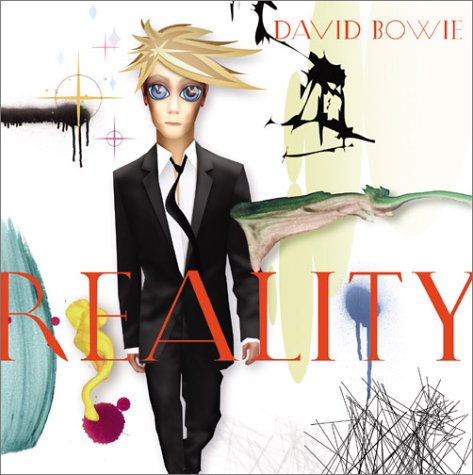
The sixties scene was an era Bowie referenced from his earliest recordings (London Boys) and one of the motifs and influences that's remained a constant throughout his peacock career - mentions of Lennon, Beatles and Stones on various singles. Twiggy and Jagger getting name checked on Aladdin Sane (along with a Stones cover), Pin Up's set of swinging London standards and Young Americans (covering classics like 'Knock On Wood' and 'Footstomping' during live shows), and pitching in with 'Pictures of Lily' on The Who tribute album through to the slim-fit suit on 'Reality' being almost a homecoming to the Lord John look pictured above...
For some strange reason all tracks are playing - Silver Tree Top track, but DLs should be ok
David Bowie and The Lower Third - Can't Help Thinking About Me (There's a clip of Bowie on his mod days, Steve Marriot and a 1999 version of 'CHTAM'here)
David Bowie - In The Heat Of The Morning - (BBC version)
(The Last Shadow Puppets made a healthy go of 'INTHOTM')
Davie Jones and the King Bees - Louie Louie Go Home
(LLGH was the B-side of Bowie's first single "Liza Jane")
Ziggy Stardust - The Mod Who Fell To Earth
A note on the tunes....and a Bowie Bonus Can't Help Thinking About Me (1965)
The first recording to feature the newly named David 'Bowie', and almost a blueprint of Bowieness the outsider lyrics and ambiguous angst of "my head's bowed in shame" "blackened the family name" to the set piece template of semi-spoken verse and Bowie-bellow on the chorus, it's a tune that wouldn't seem out of place on any album since Scary Monsters.
In The Heat Of The Morning (1970)
For my earth pounds the BBC take of this tune is superior to the official album version, and benefits from being enhanced by the extra bounce of Alan Hawkshaw's fantastically funky keyboard coda.
The Beatstalkers (touted as the Scottish Beatles), were under Ken Pitt's management at the same time as Bowie (and also signed to Decca). They were offered first refusal on any unused Bowie compositions or offcuts, 'Silver Tree Top School For Boys' is one of these, and a Bowie penned 'Penny Lane ' sound-a-like from 1967.
I am on something of a Bowie buzz lately (two Bo' posts in two weeks) brought on by reading the Fantistico Dave Thompson book To Major Tom - a gem and a joy of a read if you're into any type of music or movement from Bowie's catchment era
Following on from Friday's post - my Weirdo review taken from the current edition of Level 4 magazine, an absolute head-spinning novel framed against an 80s landscape - it is the perfect read as those autumn evenings begin to draw in and the shadows start to stretch out
If you're feeling eagle-eyed - perhaps play spot the song reference for each of the chapters (and keep your peepers peeled for me in the credits)
Comes in the format of two art, fashion and music periodicals.
Plectrum The Cultural Pick: where Cathi Unsworth - described by author, David Peace, as “the First Lady of Noir Fiction”, talks to Jay Clifton about her previous books, her approach to writing and latest novel 'Weirdo'. Chris Price, interviews Bruce Lacey on his associations with The Goon Show, Ken Russell, The Beatles - he was George Harrison’s flute playing gardener in Help, and is celebrated in the Fairport Convention song, Mr Lacey. And new short fiction by Max Stites, fashion from Fifi Chachnil, make-up by Illamasqua and shoes by Jefferey West.
Perhaps, follow up by backtracking to my Bad Penny Blues interview with Cathi here..
Level 4: (a horror special) comes loaded with a Cathi Unsworth interview, Julian Wollatt's Zombie photography, Dan Newman's best of TV Horror.
And me (waddya mean shameless self promo!) contributing music reviews (Steve Hooker), book reviews (Cathi Unsworth). And an exclusive interview with the ex-Ants that are now Wolfmen - Chris constaniou and Marco Pirroni discussing Live Aid, working with Tony Visconti, 12 string basses and conspiracy theories.... it's all hereabouts
Take a stroll to the bottom of this post and you'll see the cover of the latest issue (# 8) of Vive Le Rock, an edition frothing over with interviews: Richard Hawley, Kevin Rowland, Steve Jones, Wayne Hussey - also album, book and gig reviews.
Take a thumb through the reviews section of VLR and you'll find me holding up score cards for the New York Dolls, Suzi Quatro, Dirtbox Disco and Zoe Howe's Wilko Johnson biography - written in collaboration with Wilko himself.
Understandably with such a packed programme, editorial tweaks and changes were necessary to keep to the word count. So, here's my submitted review of Looking Back At Me - and the published version. A tip of the titfer is due to all at VLR HQ for trimming it down, and, keeping the essence intact.
You'll also notice a couple of questions pitched at his Royal Wilko-ness, click on the VLR cover pic to get the rest of our chat and natter...
It's no overstatement to say I've probably ploughed through too many rock biographies in my time. Although only a handful are so supremely sculpted that they will stay with me forever. Looking Back At Me is one for this hand-picked library. Much more than the sum of it's parts - and larger than a life story, this is John Wilkinson walking and talking you through an oral and pictorial history (school reports, rare paintings/photo's memorabilia) of all that is Wilko: academia, anarchy, art, rock 'n' roll and carrying forward the tradition of journeymen blues musicians handing down their tales of troubles and travels.
If you've been lucky enough to have met Wilko ( I have, several times as we drink at the same pub) you'll know what you see onstage is exactly what you get offstage, an explosion of arm flailing, bug eyed-expressionism, intellectual theorising and raconteurism. Wilko isn't someone who knows stillness in anyway. There is no off button.
Zoe Howe's sensitive positioning of all the multi-faceted pieces that make up her study, perfectly renders Wilko's unrelenting restless energy and constant forward motion - she's pulled off the impossible trick of bottling Wilko's (smokestack) lightening. There's blood on the scratchplate, Canvey mud under his nails and the Thames Delta blues runs through him like a stick of Southend rock. Looking Back at Me is a stunning reinvention of the rock memoir format - a combination of compendium and confessional - creating a new standard which all future music biographies should measured against.
To catch the rest of our Looking Back chat - click on the VLR pic
As mentioned at the top the page, the New York Dolls blitzing new album Live From The Bowery is lent a critical ear in VLR - taste test one tune from it here....
Just over a month ago - well 1st of November to be exact Piley, myself and our three guests: local author Syd Moore, Roman Jugg (ex of The Damned) and Paul Pouch-of-Douglas were all ready to roll with the Halloween/horror edition of Radio Podrophenia.
The questions were prepared and the playlist had been picked - including one tune that's been the cause of some historical hi-jinks for Piley and I. It won't mention it by name (I daren't mention it by name) but will clue you in as much as it's the closing track to side one of Eno and Byrne's My Life in the Bush of Ghosts.
Previous spooky doings based around this art-rock oddity include: perfectly workable DJ decks going dead on the spot and flickery electrical faults and blow outs(captured on this podcast) - We've now become so superstitious about the tune and it's voodoo routines that we ran a should we/shouldn't we poll on Facebook. Of course the votes were all in favour of 'play not pass' - so, it got plonked on the playlist.
When Tuesday the 1st rolled around, it was more of a disappointment than surprise to find there would be no show that night! Why - an unknown electrical malfunction had taken the station out of action and off-air for the evening. Technical gremlins, pesky gremlins and variations on the gremlin themes were repeat motifs for the rest of the evening spent in the pub.
Although the last surprise was still to come - reviewing the a team photo - we spotted something odd over my shoulder. A stone gremlin. But not just any ol' gremlin. This was a musical gremlin - plonked atop a gramophone...and facing towards us - gurning at the group...
Left to right: Syd Moore, Roman Jugg, Piley, Paul P.O.D, me - our stonefaced lurker
Hopefully we'll be free of heavier level spookery as Syd Moore joins us for Take 2 tonight with a live reading from her debut novel the Drowning Pool. The perfect book for tucking into by a roaring winter fireside. If you haven't read it yet - check out my debut book review here at Plectrum - The Cultural Pick
Also joining us in Podrophenialand tonight is Fi Jacobs from the Railway Hotel for a bumper December edition of the Railway Roundup..
We're live from 9 on Chance Radio. And
If you missed last week's edition (sport) - you can reserve a ringside seat for an action replay below..
I went to one of Plectrum's always excellent Live Editions last month and caught Cathi Unsworth reading from her latest book - Bad Penny Blues. Described by David Peace as “the English The Black Dahlia“, it's fictional take on a very real, London based serial killer - Jack the Stripper. Bad Penny Blues brings to life a London of soot-smudged buildings and squalid lodgings, as the gin-tinted winter chill of the late fifties slowly warms into a still-thrifty early sixties. A period of blossoming pop, political shifts, police corruption and a bruised city sharing a national sense of hand-me-down stoicism that feels closer to the Second World War than Swinging London and the Summer of love.
Having been frozen to the bone during Cathi's reading, gripped by the book since and being the cheeky blogger I am, thought I would ask Cathi if she could assist with some Bad Penny enquiries
Bad Penny Blues paints a pin-sharp portrait of the mind-set, vibe and detail of late fifties/early sixties lifestyle, even down to the language: words like ‘wristwatch’ – which you don’t hear anymore. How did you research the period and were there any especially useful films, books or biographies? It was a two-year immersion into the time tunnel of 1959-65, a period I have always been fascinated by – that black-and-white world of post-War, pre-Swinging London. I put a list of the books and films that really helped in the acknowledgements and what I found was that though the historical record was vital, what really brought the era alive were the films, the music and the pulp paperbacks of the time.
The crime at the centre of the book is the unsolved Jack the Stripper murders that occurred within this period — eight women were found strangled and stripped in and around the Thames, but for one, who was left in the middle of Kensington.
Some of the key books were Brian O’Connell’s Found Naked And Dead, the first true crime account of the case by a crime reporter who was completely au fait with the milieu in which the crimes took place, and used the contemporary slang that was so vital for me to find my way back there. Kate Paul’s Journal, about her teenage years as an art student in the Fifties and Sixties was a beautiful evocation of time, place and attitude. Adam Smith’s Now You See Her: Pauline Boty, First Lady of British Pop, a superbly written and researched book was also essential – amazingly, this is not a published work but a PDF downloaded from the Internet via www.writing-room.com that I would urge anyone interested in the lost goddess of Pop Art to check out. Tom Vague, great psychogeographer of Ladbroke Grove is an eternal inspiration – all his pamphlets and articles always have lengthy bibliographies and filmographies attached, which is why I wanted to add all mine at the end of the book, to acknowledge those people I learned so much from and pass on that information. But perhaps the most evocative book of all was an old Pan Paperback from 1959 called Trouble In West Two by Kevin Fitzgerald that was given to me as a birthday present by Max Décharné, whose own books Kings Road and Straight From The Fridge, Dad! are also excellent sources on this period. It contained my favourite expression that I had never come across in any other book or article – ‘feather girl’ for a dominatrix!
And as for films – Bryan Forbes was my main man. In Séance on a Wet Afternoon he captured the uneasy atmosphere and in The L-Shaped Room the exact time and place that I was searching for. But the film that most potently took me back ‘there’ was Basil Deardon’s The Blue Lamp, starring Dirk Bogarde as a juvenile delinquent and the debut of Dixon of Dock Green. It was watching the car chase in that, down Harrow Road and into Ladbroke Grove, and seeing the camera swoop up – and there’s no Westway, no reconstruction, all the bombsites still there. This was Ladbroke Grove how my characters would have seen it. This was Colin MacInnes’ ‘our little Napoli’.
The popular idea of fifties London as a coffee bar and palais age followed by the swinging sixties is a romanticized, or at least one dimensional, view isn’t it – do you think it’s important to show the the grit behind the glitter? Definitely, that is the whole point of ‘noir’ fiction, to show the society that creates the crimes, and in this era, it’s the flux that is so enthralling. The British Empire was crumbling, Profumo and the Philby spy ring would do for the Macmillan government in 1963, the same year that, according to the greatest poet of the age, Philip Larkin, sexual intercourse was invented. Male homosexuality was illegal but male homosexuals were basically in charge of all pop culture. Lord Boothby was mixing it with the Krays; Winston Churchill’s daughter was rubbing up against the Ladbroke Grove rude boys; the Grammar School kid was replacing the Old Etonian as the shaper of our national identity as the Swinging Sixties took hold. Barriers were coming down, people were finding their own ways of making fun and the corporate world had yet to figure out how to co-opt all of that. An exciting time – but also a dangerous time.
The crimes in my book are meshed in to all of that. None of the girls were from London, they all came down here looking for the bright lights and quickly discovered the dark places between them. Which leads to the larger point of my book, which I think is the dilemma that’s at the root of all noir – the lack of empathy between a man and and woman. Jack the Stripper is the darkest manifestation of male hatred, a man whose contempt and revulsion of women was so profound that it wasn’t enough just to kill them, but he had to leave them naked, violated and degraded for the world to see... And this misogyny ripples out through the book into all the layers of society contained within it.
Were any of the book’s characters based (physical appearance or personality) on celebrities, icons or ‘scene’ people of the time? Yes, there were certain very interesting characters in this period that are mirrored in the parallel universe of Bad Penny Blues. James Myers, you can probably guess, is modelled on Joe Meek and the idea for that came directly from the geography – in June 1959, Joe was living on Arundel Gardens W11 and working in Lansdowne Studios for Denis Preston – this was where he produced Humphrey Lyttleton’s ‘Bad Penny Blues’ single and also where he secretly recorded I Hear a New World, the album he described as: “songs for astral travel”.
The first victim of the Stripper was last seen on the pavement outside Lansdowne Studios, which at the time was a well-known pick-up spot – if you can imagine, before the Street Offences Act came in about a month later, the whole of Holland Park Avenue was full of streetwalkers and kerb crawlers. Joe had recently conducted the séance, in Arundel Gardens, where he was told the date of Buddy Holly’s death, 7 February, which would also become that of his own homicidal demise eight years later. And across the road from Landsdowne, there really was a Spiritualist’s assembly…
So what I imagined was Joe opening up a channel with his weird music, through which the evil of the Stripper came, and Stella, dreaming in her bed next door, tuning into his music and the doomed girl’s frequency, picking up on what was going on…
James or Joe doesn’t actually physically appear ever in the book, but he scores the whole thing. The overlooked character of his long-suffering boyfriend Lionel Howard, with whom he lived in Arundel Gardens, really did appeal to me, so I turned him into my handsome East End boy, Lenny Jacobson.
The bent DS Harold Wesker was suggested by the real life disgraced copper Harold ‘Tanky’ Challenor, who has already been immortalised by another great, doomed Sixities Joe, as Inspector Truscott in Joe Orton’s Loot. Tanky was an WWII SAS veteran who claimed to be ‘cleaning up Soho’ and all the details of the brick-planting stitch-up at the Queen Frederika Riot of 1963 are based on what actually occured. Tanky is an intriguing bad apple – he really did manage to escape from an Italian POW camp by dragging up as an old washerwoman and later, when he joined the force, he dragged up again as a prostitute to get the measure of his local villains’ pub. And despite bearing a startling physical resemblance to Tommy Cooper, by the account of his memoir, he managed to get two propositions! He was the originator of the phrase: “You’re nicked me old beauty!” and always referred to other men as ‘darling’, a habit that seemed to mystify even himself.
Freddie Mills
Teddy Hills is based on the boxer Freddie Mills, who is surrounded by urban myth and intrigue, and was fingered as the Stripper in one true crime account. I don’t believe he was, but the strange manner of Freddie’s death – he managed to shoot himself twice in the head and then put the gun neatly down beside him before he ‘committed suicide’ as the official verdict has it – will always invite speculation.
Stella, Jenny and Jackie are inspired by women I love – the artists Pauline Boty and Kate Paul, the fashion designers Sally Tuffin and Marion Foale — and also the character of Jenny Linden in the film Beat Girl, which gave me the idea for my Jenny to have an architect dad who was busy dreaming up the Brutalist housing estates of the future from his swish pad in Kensington. Jackie has a more personal element, as a girl very like her was my best friend while I was studying at London College of Fashion. I haven’t seen the real Jackie in 20 years and was hoping to somehow magic her back… it hasn’t worked yet, but maybe she is reading this!
Jack the Stripper was active for longer and more prolific than Jack the Ripper – why isn't he as notorious? This is the most intriguing question of all and I have thought about it a lot, but still have no answer. Considering this happened within the living memory of a lot of people, and that it was the biggest manhunt in Metropolitan Police history it seems baffling that it has slipped from consciousness. Was it because the killer disappeared – or committed suicide and then had a convenient veil placed over him as some accounts claim? Was it because the victims were lowly working girls – let’s face it, ten years on, when the Yorkshire Ripper began his reign of terror, the police only got serious when a 16-year-old schoolgirl was murdered and I can remember news reports at the time suggesting that this was now a real cause for concern as the previous victims had ‘only’ been prostitutes. But I also think that it could have been completely overshadowed by a much more emotive crime that began at the end of 1963 – the Moors Murders.
Did putting yourself so deeply inside the mind of the victims: their thoughts and the tragedies and bleakness of their situations ever become difficult to recover from, or was there a technique for switching off. No, there isn’t a technique of switching off, as you saw when I did the reading – the horrors that they went through go through my mind continually and when I read it aloud I see it all. But the passages in which they recall their last moments were the easiest thing to write in the entire book. That probably sounds perverse, but my aim was to attempt to give the women back their voices that had been denied in life and ridiculed in death by many journalistic accounts, to make the reader really think what it is like to be murdered, the sheer horror of having your life brutally taken from you. To put them back in the light when they had been buried so long in the dirt.
There are some spiritualist/psychic moments in the book – is this something you’ve had experience of? Only inasfar as being plagued by horrendous nightmares my entire life, some of which have involved me ‘becoming’ someone else, like Stella does in the book. But the use of Spiritualism came from Joe Meek, and as I wrote the first chapter it seemed to me to be the only way I could convey what the girls went through, so I had to find a way of sustaining that throughout the entire narrative.
When I discovered that there had been a Spiritualists’ place over the road from Lansdowne, then I put my fictional Mya into it… and the idea of Stanley Coulter, the detective who visits her and is haunted by the Reginald Christie case that many of the older coppers would have had to deal with, came from the superb Patrick McGee in Séance on a Wet Afternoon. Although his name and his physical appearance came from Dudley Sutton’s character in The Boys. I was so appalled by what happens to my beloved Dudley in this film that I took his character’s name and very much imagine Coulter as looking like the older Dudley.
I think it is also may be hard for people to imagine now, but Spiritualism wasn’t a minor cult but a widespread religion in the first half of the Twentieth Century, and the reason for its popularity was quite clearly the two World Wars and the toll that all that death took on the civilian population. Another thing that I discovered through my research was that the wireless itself was invented by an eminent Victorian scientist, Sir Oliver Lodge. The Spiritualists believed in the Theory of the ‘Aether’ or ‘Ether’: that we all exist on our own personal frequencies that hold our form together and switch over when we die onto a different wavelength, just like a radio dial turning. Sir Oliver, who had lost a son in the Boer War, created a portable radio in order to find the wavelength that would allow him to speak to his lost boy. I really do love this theory, and it also connects back to Joe Meek, who played around with radios so much as a child and in the making of his music. And also the way schizophrenics – which I believe Joe was at the end of his life – think they are being controlled or having their minds read by radio waves.
Of course, Sherlock Holmes, the father of all detectives, was invented by the most famous Spiritualist of all – Sir Arthur Conan Doyle.
You worked at a Soho drinking club. That must be good for a book of it’s own, were there any favourite regulars, characters or tales?I worked in Gerry’s Club on Dean Street for two years in the mid-Nineties and so much of my writing has come from that experience. I was first shown through the door of the place by the late, great author Derek Raymond, and in the early Nineties, many of his acquaintances and friends from the early Sixties (when he had been fronting long firms for Charles da Silva and running illegal gaming parties in The King’s Road) were still around.
Sandy Fawkes
One of my favourites was Sandy Fawkes, who looked and sounded like Derek Raymond in an orange wig. She gave him the necessary background that went into his most famous novel, I Was Dora Suarez, about the sexual inadequacies of a serial killer, as she had inadvertently had an affair with one, while covering a quite different story for the Daily Mail in America in the Seventies. She spent several days with a man called Paul John Knowles, unaware that he had raped and strangled 18 people – the reason he didn’t kill her, she reckoned, was that she was a writer so could tell his story. Like all killers, he was immensely vain. She did write it up, the book was called Killing Time, reissued as Natural Born Killer in 2004, shortly before Sandy herself sadly passed on.
Sandy’s experience also gave me the core idea for my first novel, The Not Knowing, which contains several passages in which ‘The Deansgate Club’ stands in for Gerry’s – I really wanted to nail down what it was like in that time before everything disappeared into the ether, which before very long, it surely did.
But yes, stories are legion – Dan Farson spat the gin and tonic I had poured for him all over me and then showed me how you actually make one – by just ‘showing’ the merest drop of tonic to the gin. I was lucky with him actually, he had a habit of throwing glass ashtrays at barmaids’ heads, so I got off lightly. He must have sensed what a fag hag I am. Burt Kwok told me how he used to be in an all-girl (except for him obviously) Hawaiian band. And I got to see the mighty Keith Waterhouse in action on many an occasion. God rest his soul, Soho will not be the same with out his twinkling smile and deadliest put down: “Are you going to say something interesting? Or are you going to FUCK OFF?”
Have you met anyone involved with Jack the Stripper – police, prostitutes or perhaps someone who claimed to know ‘Jack’ or have crossed paths with him? No. Thanks to some friends of mine, Dave and Bianca Price, whose families have worked on Portobello Road market for generations, I got to meet a lovely Irish policeman who had worked the beat at the time – and had actually witnessed the Mosley rally I describe in the opening chapters. He told me a lot of information that was crucial, things that you would never have thought of – like the fact that all the beat bobbies in those days didn’t have handcuffs, there were only a few pairs to each station, so if you collared a villain you had to bring him in with own skill and judgement – although he did say that the public were a lot more helpful towards the police then than they are today… He also mentioned Freddie Mills in connection with the Stripper rumours. But I haven’t met anyone who was involved in the case, and I wouldn’t want to. This is an imaginary universe and my culprit is completely fictitious, just the kind of person who I feel could have been responsible. I don’t think any of us will ever know who he really was. I just wanted to try and do something for the dead girls – they were the most important people for me, not that bastard.
If you could beam back to the BPB era for one day, what would be on your sight-seeing-list? I would love to wake up in Ladbroke Grove as it was then, walk around all the places that are now under concrete, go into Henekeys for a lunchtime jar with Pauline Boty and her pals. Then I would take a bus down to Soho and buy loads of records that all cost a fortune now, see the beginnings of Carnaby Street and Marlborough Court, have a cappuccino in a proper coffee shop and catch some bands at The Flamingo or The Hundred Club. If time allowed, I would then get a cab up The King’s Road and have a vada at the Gateways Club. It was a mixed club in the era when BPB takes place, so I would love to see Dylan Thomas getting thrown out on his ear for being a lush and Di Dors turning up with her dodgy gangster entourage!
What sparked your interest in crime writing – was there a book or author that made you switch from reader to writer? Yes, I have mentioned him already, Derek Raymond got me hooked. I met him in 1993 when he made a record with my pals in Gallon Drunk and he changed my life completely. I would advise anyone who hasn’t read him to seek him out – he was out of print for years after his death in 1994, but Serpent’s Tail are in the process of reissuing just about the whole lot of his back catalogue. As well as the Dora Suarez book I previously mentioned (which is the one the record was adapted from), and the other great book in that series, He Died With His Eyes Open, the book for anyone who is interested in the Bad Penny Blues era to get is his 1962 classic The Crust on its Uppers. Not only will this highly autobiographical account tell you precisely what life was like for the young, thrusting villain about The King’s Road in 1962, it also comes complete with a glossary of slang, so you can talk like a morrie and avoid the enemy slag.
I was wondering whether I would like to bump into him on my day back in time, he would probably have been down the Gates… But I don’t know if I would blow a hole in the space-time-continuum by doing that. Maybe I would just observe him in action from afar… He would undoubtably have been the sharpest dressed man in the room. The sharpest-tongued too!
So many legendary London locations have become ‘Starbucked’: Chelsea Drugstore is a McDonalds, Mary Quant's first boutique is part of pasty-shop chain – do you think Soho will have the corporates moving in eventually? Soho is about to be flattened by Crossrail – and how the hell did that happen? The Astoria is already gone and the empty space of its passing is a heartbreaking sight to see. The top half of Dean Street will be demolished next; 200-year-old buildings that you would think would be protected will not stand in Crossrail’s way. This is the humourless bastards who have run this country into the ground for the past 30 years having their final act of revenge on us who still pride ourselves that we can at least think for ourselves: No fun, my babe, NO FUN. Soho must die so that exhausted drones can get from Stratford to Acton more quickly and efficiently, saving their employers money and keeping business safe for the money men that own our country.
Soho has always been a state of mind as much as a place, and that state of mind is rebellion, creativity, sanctuary, adventure, freedom. Now we are going to have a bloody great rail track going through the middle of our sacred streets.
Property developers – the biggest bastards of them all.
John Osborne, Mary Quant, Joe Meek, Richard Hamilton were breaking boundaries and new ground during the BPB era, do you think being book-ended by Elvis and The Beatles has overshadowed recognition for creativity of the BPB era? Definitely – but in a way, that is good. It keeps the enigma of the era alive; it sustains its mystery by not being overdone. I mean – the reason that the film Telstar was so brilliant was not just because it was such an obvious labour of love and that the casting, costumes, script and everything else were so perfectly crafted. It’s because we don’t know all the mysteries of Joe Meek and the time when he lived has not been burned into a thousand bright contemporary images on our retinas; we haven’t been bludgeoned to death with it. Unlike Nowhere Boy, which I have no desire to see whatsoever – we already know everything it is possible to know about John Lennon, there is no mystery to him left at all, nothing that hasn’t been picked over a thousand times by a thousand bores before. Poor John.
Of course, the downside of that is that Telstar was only a blip of a cinema release (although I’m sure the DVD sales will make up for that) and Nick Moran and his cast did not get the recognition they deserved for making it; whereas the heavily Establishment-connected Sam Taylor Wood was feted from the rooftops… But then, would you want something that you loved dearly to be picked up on by every Richard Curtis or Sam Taylor Wood?
Music is a constant in the in the book. Are you musical – do you play an instrument or ever been in a band? No, but I was a music journalist – if you can’t do it, write about it, as they say! Music has always been really important to me, and I got my first break on the weekly paper Sounds, which although it has been lost to history and the malodorous shade of Garry Bushell, was actually the punk paper. Which is something I tried to bring back to attention in my second book, The Singer, which was partly set in that era. History is always written by the victors, so all punk retrospectives are usually seen from the point of view of NME journalists. But my first editor at Sounds, Tony Stewart, was at the NME at the time when Sounds kept getting there first, putting The Damned on the front cover the moment they heard ‘New Rose’, no interview or anything, just the love for that single – and he said NME were shitting themselves as Sounds circulation overtook theirs while they were still putting ELP on the front cover.
You’ve used song titles for each chapter – was it difficult to pin down the final selection and which titles were left off of the list? The very first thing that I did when I started BPB was to look up which singles were Number One in the charts on the days that the bodies of the victims were found. That formed a very suggestive and spooky soundtrack, which I added to by putting the name of a chart single from the relevant year as the title for each chapter. The one that got away was ‘Nowhere To Run’ by Martha & The Vandellas, which was perfect but one year too late!
This is a very fertile period for music, and shows the endearingly odd tastes of the British audience, embracing everything from do-wop to music hall, Joe Meek’s space pop, classic Baccarach & David torch songs, Motown and the birth of the British beat explosion. I wanted to add a dimension to the narrative that was like listening to a jukebox, the words taking on sinister new meanings in view of the crimes – ‘The Night Has A Thousand Eyes’ by Bobby Vee, ‘She’s Not There’ by The Zombies and ‘Midnight Shift’ by Buddy Holly, to name but a few, will never sound the same again. Even Tommy Steele’s ‘Flash! Bang! Wallop!’ manages to take on a corrupt and sordid new meaning!
So what’s next after BPB – would you be tempted with non-fiction, perhaps true crime or a biography? I’m not at all interested in non-fiction, there is no room for the imagination to take flight there. Also, who is to say what the truth actually is? Nothing can ever be definitive, everything is open to interpretation, which is why in my books I like to try and show you events from as many different perspectives as possible. So my next book will be fiction too, set in the Norfolk of my youth in the ominous year of 1984.
I have become obsessed with this character called Captain Swing, who was the figurehead of a workers uprising in the Eastern Counties in the 1820s, another phantom but on the opposite side of righteousness to Jack the Stripper. Many of the miners compared what happened to them in 1984 to the Swing Riots, so I am going with that as an underlying idea. But the main themes of the new book will be teen-on-teen violence and the concept of identity – cults and clans, the family, community and the state, the things that unite us and the things that divide us. When you can move back and forth through time, somehow these things come more clearly into focus.
Any plans for a film or TV adaptation? I would love it. ‘My people’ as they say, have been working on pimping it around, but nothing’s happened yet… These things take so long if they ever do happen that it’s not worth getting excited about. Although of course I do think it would make a brilliant TV min-series, something like the adaptations of Jake Arnott’s The Long Firm or David Peace’s Red Riding. Or, in my dreams, if Bryan Forbes could be tempted out of retirement, bringing John Barry with him… I do have fun imagining the dream cast but you would really need a time tunnel for that, as I can’t see anyone else but Albert Finney in Saturday Night and Sunday Morning for Pete…
Are there a couple of tunes that snapshot the mood of Bad Penny period for you? ‘I Hear a New World’ by Joe Meek is what I envision Stella is listening to as she has her first dream/transmission. ‘She’s Not There’ by The Zombies as this chills me to the marrow in the Stripper context and is the perfect soundtrack for the chapter I have lent its name to.
And thirdly – I know you did say a couple, but thirdly anyway – ‘In Dreams’ by Roy Orbison. I realise that David Lynch appropriated this for Blue Velvet with such stunning originality that it is a bloody cheek to try and swipe it back. But I wanted the whole book to feel like a Roy Orbison song, and this was a hit in 1963, Roy did actually hear the song in his dreams, and the connection to Stella’s situation is too great to ignore. I would say ‘Oh Pretty Woman’ to try and save it back from that dreadful film, but ‘In Dreams’ is just too powerful.
A capital sized thank you is due to Cathi (described by Ray Banks as The Queen of UK Noir) for her generous help with this interview..
We dropped into one of the many London Word Festival events last Friday - Avant Noir'A night of criminal fiction, comic art and music of a darker hue'. An evening that saw four contemporary crime writers reading extracts from their late night tales to a live music soundtrack from contemporary jazzers.
Ray Banks was a new-to-me author, now fast-tracked to my 'must read' list. While opening the show was Cathi Unsworth delivering a chilling piece from the excellent Bad Penny Blues accompanied by the sharp suited four piece - Get The Blessing.
Almost hidden amongst the listings, Get The Blessing were an unexpected treat. Featuring the Portishead rhythm section of Jim Barr and Clive Deamer (bass and drums) who lock and load with business end of the beats, while Pete Judge and Jake McMurchie (trumpet and sax) handle all the huffing 'n' puffing - occasionally relaying and delaying it through effects pedals for enhanced other-worldiness.
Get The Blessing are almost Bernard Hermann scoring Beastie Boys instrumentals, gear-shifting between cop-show soundtracks and Zappa instrumentals or using Acid Jazz's sprightly style offset against John Bonham's heavyweight wallop.
A special mention must go to drummer, Clive Deamer, who, during the end-of-evening, double-whammy jazz-off with Led Bib used hands, maracas and both head and handle ends of his padded drumsticks to devastating effect during a stunning, free-piece finale.
I don't know how Mrs M does it. I am a bugger-to-buy for. Birthdays, Christmas etc. Yet, every year she manages to fill some crack in the collection with a trump card. This year it's Keep On Running - The Islands Records Story. What a corker and a cracker of a read. Full page artwork, album cover galleries, but, more mind fryingly it threads together the back stories and tales of some of my most played or favourite styles and artists. Artists, I hadn't quite connected were on the same label together. It's suddenly like finding distant groups of friends gathered in the same school photo.
Blue beat, ska, reggae and the Trojan association, Guy Stevens and Sue Records (we'll save that for another post), Spencer Davies, Traffic, Wynder K Frog, Head Hands And Feet, Fairport Convention, John Martyn, Nick Drake, Kevin Ayers, John Cale, Roxy Music, Eno - and into the eighties and beyond. But for now, let's go from the beginning.
Written and performed by Jackie Edwards from 1958 ~ one of the Island's earliest releases, We're Gonna Love is a sonic eclipse of rock, roll 'n' reggae and blue beat meets big band. Jackie late wrote Keep On Running and Somebody Help Me
From Islands 'pink' period Quintessence look exactly as you'd imagine ~ a fuzzy-faced commune of flute-tooters and freak-beaters.Celebrating Notting Hill when it was sleazy stoner central (best rendered here)rather than the Boho village it's become. Quintessence - Notting Hill Gate
And how must have this lot bristled on the grizzled roots, rock and reggae artists when they signed to Island..Richard Williams ( head of A and R from 73 to 76) intro sets the scene
ILC made the original moon boots as used on Apollo 11
Well that's Andrew Smith's Moon Dust done and dusted (ouch!)From the book's giddy list of brain-frying facts, fresh perspectives and character analysis, a couple observations still orbiting about my noggin are:
That for the all acid-headed, hippy, other-wordliness of the counter culture running parallel to Apollo Project, it was only the handful of level-headed astronauts flying in and around the lunar orbit between 69 -72, that had a truly trippy, out-of-this-world experience. That Neil Armstrong is the coolest of cucumbers.
That with even with NASA's 99% safety rate, on a Saturn rocket made from six million components - that 1% still translates as six thousand parts which may fail.
One criticism though, for a book using the Apollo story as it's launchpad, there could have been less of what the author wore to the interviews, the condition of the motel carpet or yet another quote from J G Ballard, and more moon matters - perhaps structured by the sequence of Apollo mission's too?
Anyways I'm two chapters into Tom Wolfe's The Right Stuff, which hits home, heartbreaks and humanizes the earliest steps of the space racers - right from the opening sentence.
And on the subject of space books this is a must read for the scale, technical detail and timeline of events
But enough of my ol' guff, get your moon boots on and let's start stomping.
All tunes removed by DMCA takedown
Owen Gray - Apollo 12
Derrik Morgan - Moon Hop
The Crystalites - Splash Down
And as a bonus - Rico's reggae remake of the Star Wars theme.
Rico - Ska Wars
Haven't seen this yet - but it's meant to be a corker. And any ideas on the song spun during the trailer?
The Sex Pistols lastpre -Bill Grundy'Filth and Fury'- interview, was by Barry Cain for Record Mirror - click on the photo to supersize the original article....
If Nick Cohn'sAwopbopaloobopAlopbamboom is Ye Olde Testament of Rock, the New (Wave) Testament being Jon Savage'sEnglands Dreaming, then Barry Cain's 77 Sulphate Strip is surely the Dead Sea Scrolls revived and risen again from the russet coloured copies of his Record Mirror reports, reviews and interviews, scrapbooked against a lip-smacking-ace-tasting-page-turning-eye-bulging micro dot-to-dot diary of '77's key moments and movers, groovers and shakers. The year when groups of grey-faced, straight-laced politicians and hair flare bunches of prog and pop stars went twelve rounds against a fistful of prickly punks. 365 days with more dynamics, dramatics and duality than any year since pop records began.
After his stretch at Record Mirror, Barry went on to launch Flexipop, one the snappiest music mag’s ever published, I found a few copies in the loft recently and had forgotten how they crackle with facts, fun and features - including a genius parody of The Face's famous '82 'Hard Times' cover - 'Really Hard Times' starring two turps glugging tramps which perfectly burst The Face's snoot-nosed, yell and bellow bubble .
So, some questions for Barry Cain then.... 77 Sulphate Strip is one of only a handful of rock books I've read without any acknowledgment or nod to The Beatles - it's like they never existed. Was this the mood at the time No. The Beatles meant everything to me and most my mates throughout the sixties. They were my teenage idols and helped take the sting out of those years. There’s an unsubtle homage in the names of the characters in StreathamLocarno at the beginning of Strip. I stopped dancing to The Beatles after Rubber Soul because that’s when they started inviting me back to their place – via the Pye Black Box in my bedroom – where I could listen to their darkest thoughts. They changed the way I thought, simple as that. And thank you, for your very kind words. They mean so much. Incidentally, one of the ‘Hard Times’ tramps in the picture is my dad who will be 91 this year and was, I guess, my fifth Beatle. I was an only child and my parents (my mum is 81) have had four dogs all dying tragically and leaving my mum and dad desperate and bewildered. The last one, Bobby, a cute black poodle, died a week ago in my dad’s arms, and it’s eating them both alive. I buried Bobby in my back garden alongside the previous two and that nearly fucking killed me. I felt like some canine-killing version of Fred West.
Sorry to veer off the path , it’s just worrying me right now. Pray, continue. How did you go from being part of a Motown loving Boot Boy and Suede head set to becoming Record Mirror journalist Pure genius! If you came from a council estate in London at the time, you became either a straight, a skinhead or, if you took a lot of hallucinatory drugs, a working class hippy. It got interesting when the skinheads got into hallucinatory drugs in the late sixties, but that’s another tale. It was rare to stay on at school after 16 but I went to a grammar and emerged, at 18, with two low grade A Levels. I always kept my school friends and my flats’ friends far apart. As a result, I became, around 15, two people – schoolboy and coolboy. Two heads are better than one, and after a bit of luck and a lot of graft, I went from trainee court reporter to indentured journalist on a local paper to entertainments’ editor to Record Mirror. That’s a Yellowbrick Road a lot less travelled these days.
Your first meeting with Rotten reads like a snake charmer being hypnotised by the snake – have you met any other performers with a similar charisma Malcolm McLaren. He and Rotten both possess the ability to paint stark pictures with barrages of meticulously chosen words that give delight and hurt not. They’re in a class of their own. Joe Strummer was a little boy lost who dug his way out of his nightmare with remarkable songs and a hunk of devotion that swept me away. Paul Weller was hopelessly devoted to rue - the secret behind his genius. Hugh Cornwell and Jean Jacques-Burnel were deep sea divers in the psyche and there was nowt more challenging than a Stranglers interview. The Damned had collective charisma – they were the Commie punk band. Who else? Barry White, Bob Marley, Paul McCartney? Heaps of charisma. But not a patch on Malcolm and Johnny.
In 77 the Pistols were possibly the most hated band in history. It wasn't just the older generation or other youth movements that were anti-Punk, but politicians, musicians, record exec's, DJs and almost everyone who wasn't directly involved with the Pistols (or Punk) that seemed to despise them. Do you think it's possible we'll ever see such international outrage caused by a single rock act again Impossible. Music has popped its cork. It’s no longer the force of nature it was (what an old git). Outside the X Factor comfort zone, records just don’t sell that much anymore. That’s why TOTP was dumped. That’s why Smash Hits, RM, Sounds, Melody Maker all fell by the wayside. How many generations to go before music is just a bowl of cherries? Before life gets in the way? Before its portability and a few billion options make it futile, obvious, an easy lay? I give it twenty years, tops. My kids’ kids will give the odd flying fuck for a stunning song. Their kids? Different world. Different ballgame. Different tune.
For a movement that was all momentum and 'of the moment', Punk styles, sounds, designs and influences are still with us and everywhere from US metal to Top Shop clobber. What do you think has kept Punk (and New Wave) enduring without dating Punk was all about bright minds in bondage who wanted to fuck off out of old Durham Town. Sleepy time girls and the boys of summer dancing to a ’77 beat. Punk’s callous, disruptive demands – an anathema to Joe Public – could dislodge reality in exciting minds and create innovation. Originality breeds contempt and contempt breeds originality. It was a vicious circle that has continued to spin unabated like a flaming Catherine wheel shooting flames in every direction. And you didn’t need a voice like Sinatra’s to make the punters sway. Lapsed punks haunt the corridors of power.
I loved the piece about your mum and dad and the pub scene with the piano players, costermongers and comedians having a sing-a-long. Do you think the real seventies get overlooked with all the novelty nostalgia and ‘Abbafication’ of that decade I don’t think there ever was a real seventies. It was the itsy-bitsy-no-focus post Beatles decade kicking off with dross, glam, Philly, dross, New York disco, dross and ABBA. It welcomed punk with open arms, shook hands with high-street ska, gave birth to the New Romantics and invented Freddie Mercury. If you were in your late twenties in 1970 the next ten years meant fuck all really. You wouldn’t get it. The seventies had to be ‘Abbafied’ because the sixties were too sad.
Caining It - Barry with beard and Buzzcocks
Malcolm McLaren once said “I have brought you many things in my time” which included breaking Punk, World Music and Hip Hop, but equally there’s a trail of broken relationships and bad blood.” What's your take on him – genius or jinx
Genius. I mentioned in the book that Malcolm asked me to ‘ghost’ write his autobiography in 1979. I got to know him as well as anyone after countless interview sessions in my living room over a three-month period. He made me dance all night and still beg for more. He’s the Brian Clough of pop who should’ve managed England. Knowing Malcolm, I think love got in the way – he’s an incurable romantic. But we should all be thankful he turned the world dayglo.
In the book, the music press seem just as hardcore and heavy living as the bands - almost like The Sweeney with press passes rather than police badges. Were there a few juicy nuggets, tear ups and tales you couldn't include
Yes.
If you could beam back to 1977 and take someone aside for a word of advice - who would it be, and what would you say?
It would be me, I’m afraid, and I’d say, ‘Don’t get married, keep your finger on your trigger and put all your money on Man Utd winning the FA Cup, Red Rum winning the Grand National and The Minstrel winning the Derby’. Oh, and to Sid Vicious I’d say, ‘Go for it’.
The Damned, The Buzzcocks, The Stranglers, The Wolfmen (Marco from The Models and Adam and The Ants new band), Carbon Silicon (Tony James and Mick Jones) have all released new albums over the last few years. Have you heard any of the original Punk players’ new songs
I saw Hugh Cornwell play live a year or so back – great show at Scala – and downloaded his impressive Hoover Dam album, but that’s about it. I don’t listen to much music these days and when I do it tends to be through headphones attached to my laptop as I write. Usually, it’s Michael McDonald’s tribute to Motown, which is just wonderful, interspersed with Steely Dan. I’m a dude. Hey dude, don’t make it bad. Just let it out and let it in.
You were involved with Flexipop, are there any plans for an 80s sequel to 77 SS using Flexipop as source material?
Writing it now. Starts in 1978 when I resigned from Record Mirror, teamed up with then PR guru now PR mogul, Alan Edwards, running a punk PR company out of a Covent Garden squat, discovered I wasn’t cut out for a career as a publicist, became a freelance writer and spent the next two years travelling the world with rock stars, doing big, fat, hairy interviews. It ends 20 years later with the death of pop. Don’t worry, there’s not much to tell after ’84. I launched Flexipop together with my ex-partner Tim Lott (now, of course, a hugely successful novelist) in 1980, and after three bizarre years I found myself alone, publishing mainly one shot poster mags on pop’s latest flames which I continued to do for the next decade and a half. Got myself a family, a house, a Porsche. Cost myself contacts, desire, drive. Naturally, I blamed everyone but myself for those sad losses – complacency is a cancer of the spirit. But if you catch it early, the prognosis is good. Life can be groovy again Oh, and there’s a few twists and a fucking shitload of watusis. The book should be available this time next year, if anyone has any money by then….
If you were a Record Mirror reporter in 2008 - what would get you picking up your pen and pad, and who would you be trying to interview or avoid
The song Distant Dreamer made popular by Duffy, who rocked my boat when I saw her perform it at Glastonbury. The version by MC Almont & Butler is a work of art. Pop music at its finest. I think Leona Lewis has an incredible voice. I’d love to interview her. And Duffy. Shit, I sound like an old perv. Who else? Paul Weller, for old times’ sake; Eminem., for Pete’s sake; Alex from Big Brother, for fucksake. That’s five cracking interviews.
Never avoided an interview in my life.
And finally, are there two tunes one Pop, one Punk that sum up 1977 for you Anarchy In The UK and Anarchy In The UK.
Anarchy In The UK - from the Filth and Fury
Anarchy In The UK - Early version, slightly rowdier than the single, but possibly my fave take.


 "Your flashy clothes are your pride and joy " David Bowie - The London Boys
 Ziggy Stardust - The Mod Who Fell To Earth


 But perhaps the most evocative book of all was an old Pan Paperback from 1959 called Trouble In West Two by Kevin Fitzgerald that was given to me as a birthday present by Max Décharné, whose own books Kings Road and Straight From The Fridge, Dad! are also excellent sources on this period. It contained my favourite expression that I had never come across in any other book or article – ‘feather girl’ for a dominatrix!


 ILC made the original moon boots as used on Apollo 11
 The Sex Pistols last pre - Bill Grundy 'Filth and Fury' - interview, was by Barry Cain for Record Mirror - click on the photo to supersize the original article....
 Caining It - Barry with beard and Buzzcocks